


Human Development During Pregnancy
“Virtually every human embryologist and every major textbook of human embryology states that fertilization marks the beginning of the life of the new individual human being.{1}”
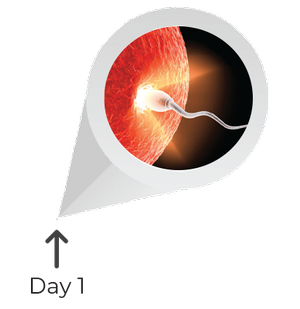
Day 1: Fertilization
On the first day of life, the sperm joins the egg to form a brand new, unique, and whole person: one cell with the complete genetic makeup (DNA) for the child’s sex, hair and eye color, height, skin tone, etc.[2,3]
Month 1: (1-4 Weeks)
More than 500 cells are present when the embryo reaches the uterus and implants in the endometrium 7-10 days after fertilization. Foundations of the brain, spinal cord, and nervous system are already established. By day 21, the heart begins to beat, and the child has a blood type, often different from the mother’s.[4]
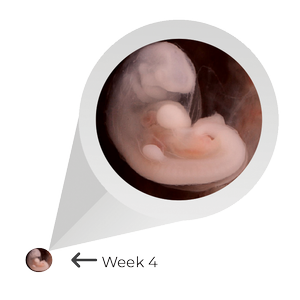
Month 2: (5-8 Weeks)
By 6 weeks, brain waves can be detected, and the brain is controlling 40 sets of muscles as well as the organs.[5] Fingers and toes are developing, and at 7 weeks, the chest and abdomen are fully formed.[6] As the baby swims in the womb, the baby now looks like a miniature human infant.[7,8]
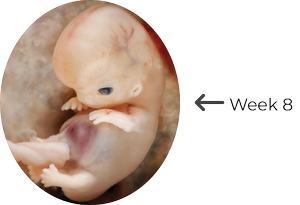
Month 3: (9-12 Weeks)
Unique fingerprints form and never change.[9] The baby now sleeps, awakens, and exercises muscles by turning his or her head, curling his or her toes, and opening and closing his or her mouth. If the doctor strokes her palm, the baby will make a fist. Baby’s fingernails are present at 11-12 weeks. Even though mom cannot feel movement yet, the baby is very active. The baby breathes amniotic fluid to help develop the respiratory system. Gender can be determined, and family resemblances may appear as well.[10] All the organs and systems of the baby’s body are functioning.[11]
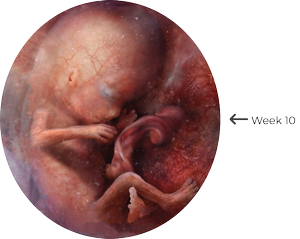
Month 4: (13-16 Weeks)
By the end of the fourth month, the baby is 8-10 inches in length and weighs about ½ pound. The ears are functioning, and the baby hears his or her mother’s heartbeat and other sounds, like music.[12] Lifesaving surgery has been performed on babies at this age.
Month 6: (21-24 Weeks)
Oil and sweat glands are functioning. The baby’s delicate skin is protected in the amniotic sac by a special ointment called vernix. The baby grows rapidly in size and strength while the lungs become more developed.[14] Babies born during this period have survived.
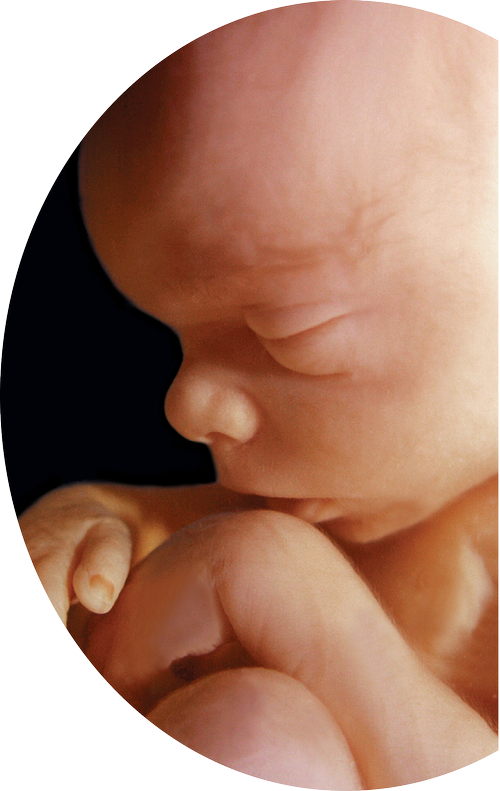
Month 5: (17-20 Weeks)
If a sound is especially loud, the baby may jump in reaction to it. The baby may also start sucking on his or her thumb.[13]
Month 7: (25-28 Weeks)
The baby can now recognize mom’s voice. The baby exercises by stretching and kicking. The baby can hear, touch, taste, and look around in the womb.[15] In males, testicles descend from the abdomen into the scrotum.[16]
Month 8: (29-32 Weeks)
The skin begins to thicken, with a layer of fats stored underneath for insulation and nourishment. Though movement is limited due to cramped quarters, the baby’s kicks are stronger, and mom may be able to feel an elbow or heel against her abdomen.[17]
Month 9: (33-36 Weeks)
Gaining one half pound per week, the baby is getting ready for birth. The bones in her head are soft and flexible to help with the journey down the narrow birth canal.[18] 90% of a person’s development happens in the womb.[19]